
The most frequently asked questions about compost are:
The answers to these are fairly straightforward: respectively, they are:
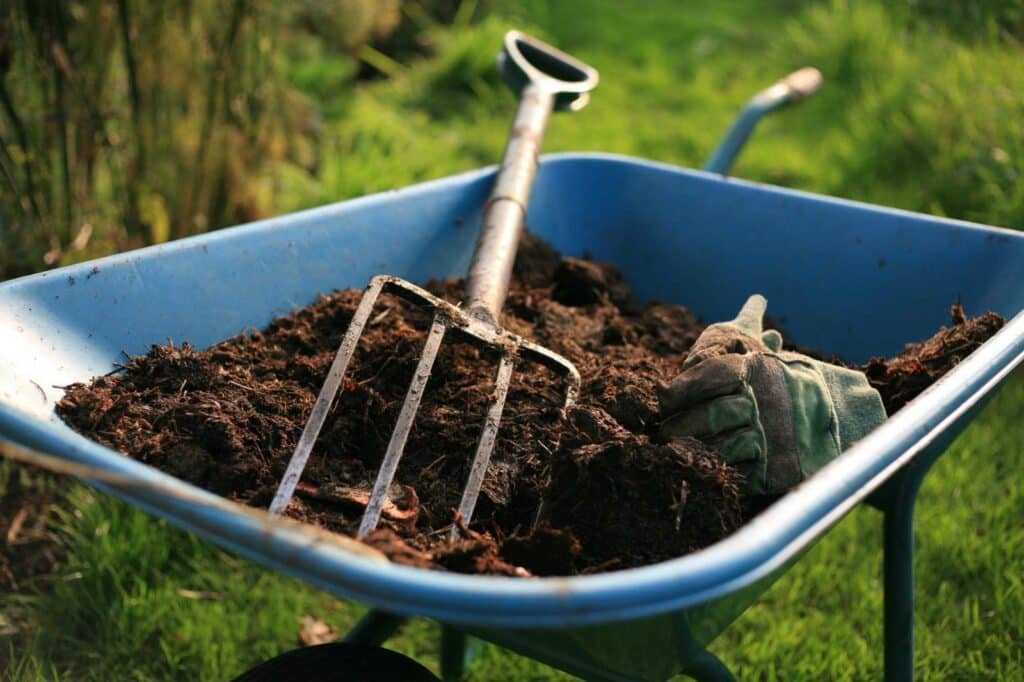
Composting is one of the least understood processes undertaken by the gardener and farmer. Basically, we are assembling a range of components which have the maximum possible capacity to support the growth and reproduction of bacteria and other plant-available nutrients, collectively known as humus. Poor composts are low in humus, while good composts have a high proportion of humus.
Contrary to popular belief, compost is not a means of recycling nitrogen, phosphorus and potassium (NPK). A compost heap is a site of transformation of dead material into living micro-organisms, of ‘producing’ plant-available colloidal minerals and, it is claimed, of transmutation.
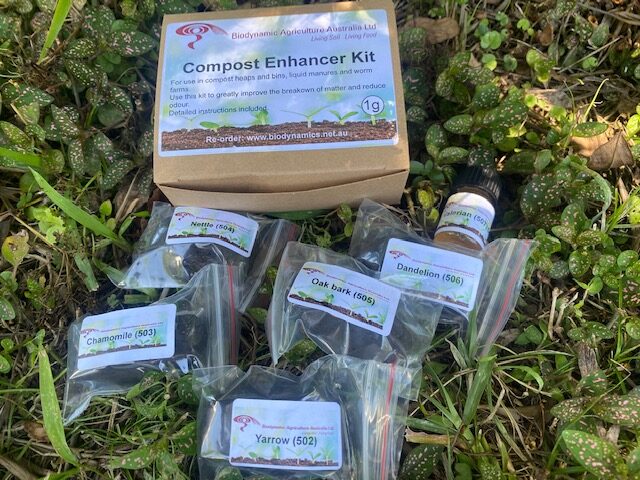
The biodynamic compost preparations are designed to finesse and maximise the natural processes of decay and synergetic up-building in the process.
Although the first principle of biodynamics is local nutrient self-sufficiency, some highly desirable inputs may have to be obtained from ‘outside’, like seaweed, rock dust, spent coffee grounds, bacterial brews from various sources such as the forest floor (or purchased ‘EM’), a little prior ‘good’ compost, molasses,…and cow manure. Cow manure is the queen of manures, rich in a long suite of bacteria from that enormous rumen, second to no other. Last but not least, clay: up to 10% is a wise inclusion, as it has an almost miraculous ability to boost the mineral and microbial activity of the compost pile.