

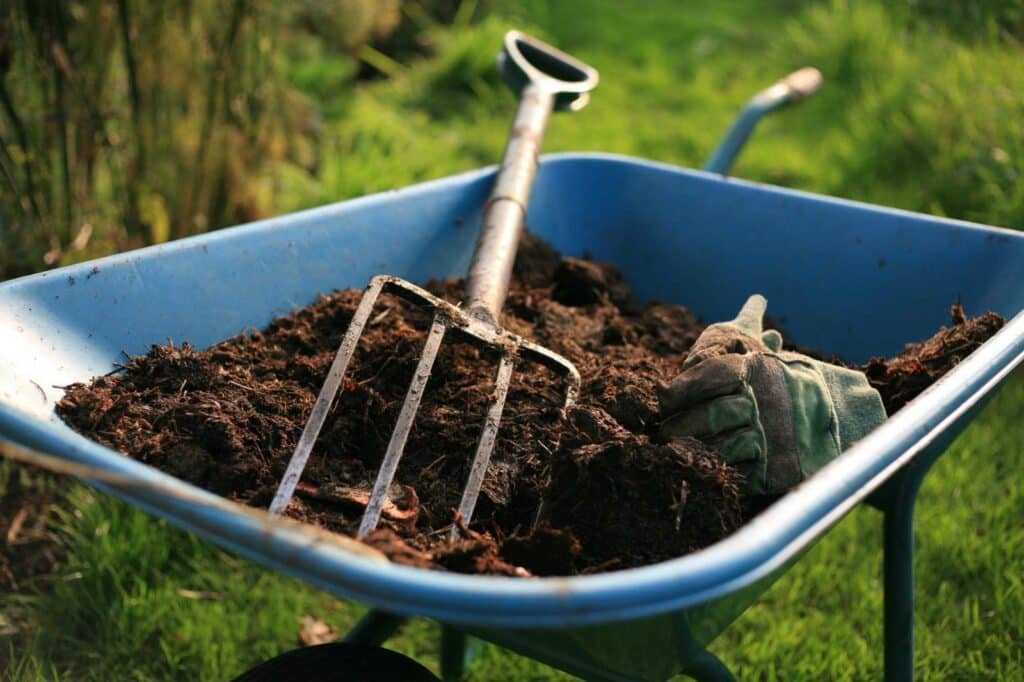
A compost pile is a transformation of dead material into living micro-organisms. Basically, we are assembling a range of components which have the capacity to support the breakdown of cellulose, the growth and reproduction of bacteria and the development of fungi, as well as generating a wide range of plant-available nutrients. Biodynamic compost enhancers are added to finesse and maximise the natural processes of decomposition and synergistic up-building in the process.
Q: How long does it take?
A: As long as it takes, and anything up to six months.
Q: Do I need to turn the pile (or windrow)?
A: No, but if you do, turn it only once or twice, to thoroughly mix the components, and possibly add water if it is too dry. Turning can accelerate the process. It is best to keep the temperature no higher than 60 degrees Celsius as do you want a predominance of heat-loving bacteria species or to kill off your compost worms!
Q: Is horse manure a good input?
A: No, as it is somewhat lacking in bacteria species, is very fibrous, and often has traces of veterinary products in it.
Q: Can I put meat or other putrescible material into my compost?
A: Yes, in small proportions. Such material will easily break down in the composting process.
Although the first principle of biodynamics is garden and farm self-sufficiency, some highly desirable inputs from ‘outside’, include:
When we use our own high-quality compost to enhance soil fertility, water holding capacity and structure, we also bestow a blessing upon our garden or farm and to the plants we grow in it.
For more detail on how to make the best compost: