
John Hodgkinson, (not enhanced by any large language model)
Associate Editor News Leaf and Between the Leaves
We know that compost heaps are sites of transformation. Once-living materials of all kinds (even pollutants and toxic stuff!) are transformed into beneficial and stimulating inputs for the soil food web of our gardens, orchards and farms.
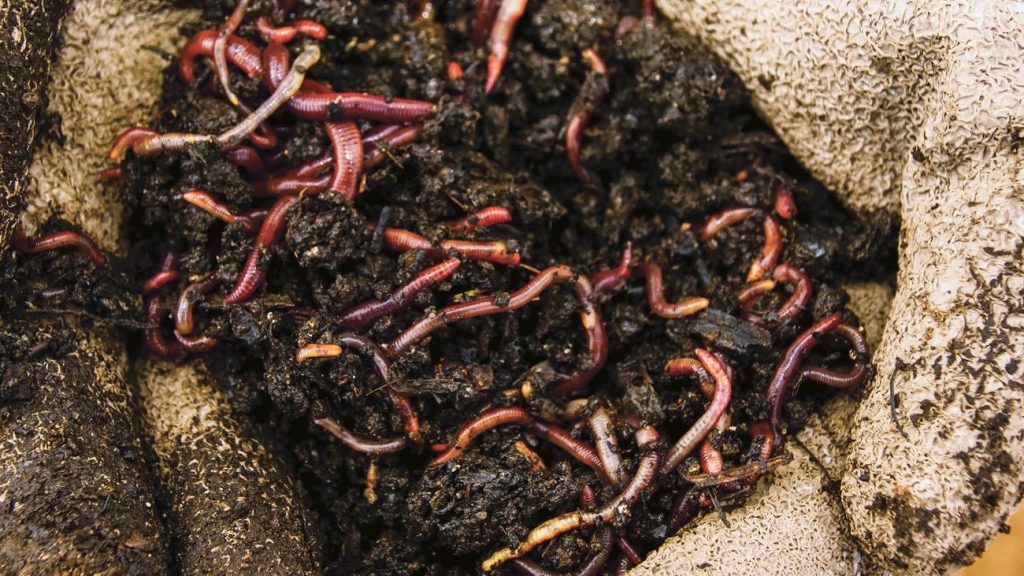
Of all the organisms – mostly microorganisms – which perform this magic in the heap, one which is often underrated is the compost worm. The most commonly used species is Eisenia fetida, aka red wrigglers. These are commercially available on the web, so you don’t have to search for them around your neighborhood.
Since I began seriously making compost about 60 years ago, I’ve always made sure that I’ve added compost worms at the beginning. To me, they are one of the essential inputs. Because of this I am careful not to include too high a proportion of nitrogenous materials (eg horse manure, fresh grass clippings) so that the heap temperature stays relatively low – no more than around 60 degrees C. Compost worms will die at higher temperatures.
Generally speaking, I consider that the activity of a large population of compost worms in any heap ensures a rapid and optimal decomposition of organic materials into plant-available nutrients for uptake by feeder roots of the plants where it is put out.
I do not turn my compost heaps, firstly on the basis that the compost worms will do the turning (!), and secondly that turning seriously interferes with the formation and growth of fungi, a most important component of finished compost.
I like to include a little lime or dolomite so that the optimal pH for worms (no lower than about 6), is achieved early-on.
When the worms you have introduced to your heap have proliferated – and they usually do – especially if you can source some cow manure, their favourite, AND you purchase and insert a set of biodynamic compost preparations, you can count on wonderfully rich “vermi-compost”. This has been described as like a 5-star Michelin chef dinner for your garden plants. Vermicasts almost miraculously contain higher quantities of N, P and K and other elements than were contained in the original materials put into the heap. This is indeed a sort of magic, which is surely “transmutation”, where elements undergo atomic modification? Nuclear fission is a gross example!
There is no other invertebrate organism as adept at shredding, breaking down and mixing the vegetative, and other, materials put into a compost heap. This activity allows bacteria, fungi and protozoa easier access to lignin, cellulose and other additives like food scraps, spent coffee grounds (a REALLY good input which sends compost worms into a breeding frenzy), molasses (to stimulate bacteria to “breed”), borax (only tiny doses, to improve the overall value of the compost to target plants), and even (small) dead animals. Maybe one should avoid the yuk and veterinary medicines factor of putting pet poo in one’s compost. If you feel citrus peel and alliums might not be ideal in the compost worm diet, then soak it for a few days before putting it in. The worms will make short shrift of them.
Seaweed in any form is a highly desirable input to put on your worm dinner table. Luckily I have always been within reach of stranded kelp on east coast beaches. If this is not available, then seaweed meal (eg Vitagrain) or even liquid concentrate (eg our Biodynamic Seaweed Concentrate – containing the compost preps), will do the trick of enriching your compost with that wonderful suite of sea minerals. Incidentally, don’t worry about rinsing the beach kelp, or removing all the sand adhering to it. Sea water is fine, and the sand is silica, a bonus for worm gizzards.
While on the subject of worm gizzards, ALWAYS add some kind of grit to aid worm digestion. The efficiency of their gasto-intestinal tract is greatly enhanced by the presence of grit, fine gravel and/or sand in the heap. For many years now, I have been adding paramagnetic 4mm minus basalt crusher dust to my compost heaps. This offers a three-way benefit : firstly the sharp edged fines are great for grinding the ingested food in their gizzards; secondly the paramagnetism (a growth force) has a stimulating effect on the worms; and thirdly, this force imbues your compost with extra growth force and benefits the soil which receives the finished compost. Biodynamic Agriculture Australia (BAA) sells a high paramagnetic crusher dust sourced from a Dorrigo NSW quarry.
Oh, and don’t forget the clay! Chief amongst the biodynamic gurus, the late and great Hugh Lovel (quantumagriculture.com) firmly put clay onto the list of essential components of good compost. I have been following his advice to include up to 10% of clay as an input into my compost heaps, and firmly believe it has resulted in richer compost. The clay can be in the form of bentonite, builders clay, or even clayey soil from your own property or a roadside cutting. The importance of clay in compost is that, especially with the aid of the worms, the formation of the clay-humus complex is strengthened, which when the compost is applied to soil, stimulates the complex further, as well as strengthening the cation exchange coefficient (CEC) of the soil.
I give the last word to Steiner’s compost preparations, 502-507. These are not only a God-given bonus to any compost heap or drum of liquid manure (eg weeds, nettle, comfrey etc), but also the compost worm, These preparations imbue a compost heap with a greater attraction for cosmic energy, and naturally the resident compost worms thrive in this energy-enhanced environment. No compost-making gardener should be without one or more of BAA’s Biodynamic Compost Enhancer Kit(s), available at biodynamics.net.au
Now here’s a tip for carrying over some of your compost worms from one compost heap to the next, as they might not “hang around” in significant numbers to properly kick off your next heap, assumably in the same spot. When a given worm population is at its height before declining as it does when the compost matures into lovely friable blackness, you might think about starting a mini worm farm.
This can be in a not-too-deep tub or a large oblong bucket, with at least one hole in the bottom to drain any surplus leachate. Partly fill this container with a combination of luxe worm feed: grass clippings mixed with some animal manure, preferably cow or horse but not chook (too nitrogenous and acidic), and spent coffee grounds from your favourite café.
Select a good couple of handfulls of worms by rummaging around your existing heap, and put them into the top layer of your new worm farm. Water a little and cover with wet bagging or similar. If you don’t start another compost heap for some weeks or months, you may need to feed these worms now and then, using the same mixture as above, or even just manure or coffee grounds alone. Wheat bran is also a good feed for them. The aim is to have a seething mass of worms ready for your next compost heap.